This article may contain affiliate links. If you buy through them, Fresh Start Beauty may earn a small commission at no extra cost to you. Learn more.
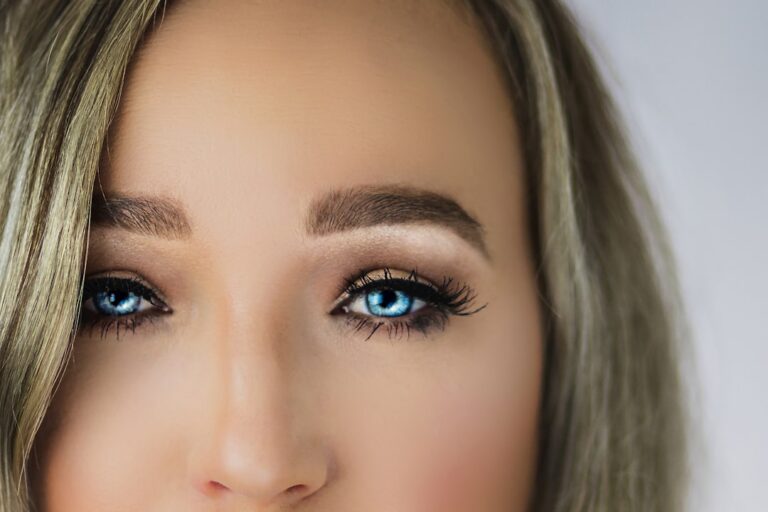
Eyeliner gets treated like a required step, but it is really just one tool for creating definition around the eye, and it happens to be one of the least forgiving tools available. Eyeshadow can do the same job with a softer edge and a much wider margin for mistakes.
Why shadow forgives more than liner
A pencil or liquid liner asks you to commit to a precise line the moment the product touches your skin. There is very little room to blend or soften after the fact without smudging the whole thing. Eyeshadow, especially a matte shade close to your natural lash line color, can be built up gradually, pressed in rather than dragged, and blended at the edges so any unevenness just reads as soft definition instead of a mistake.
This matters most for anyone still learning how their hand behaves near their eye, or anyone whose eyelid shape makes a traditional line tricky to see or draw evenly. Shadow does not care as much about those variables because it is not trying to be a crisp line in the first place.
Pick the right brush before the right shadow
The brush matters more than people expect. A small, firm, angled brush gives you control similar to a liner brush but with the forgiving texture of powder. A fluffy blending brush is the wrong tool here, it will only diffuse the color into a haze rather than a defined shape along the lash line.
How to actually apply it
Dip the angled brush into the shadow and tap off the excess before it ever gets near your eye. Too much product on the brush is the most common reason this technique looks messy rather than soft. Starting with less and adding more is always easier than trying to remove too much.
Press, do not drag
Work in small dabbing motions along the upper lash line, pressing the color into the roots of the lashes rather than dragging the brush across the lid like you would with a liner pencil. Pressing keeps the line closer to the lash line itself, which is where definition reads as intentional rather than smudged.
Start at the outer corner and work inward in short sections, the same way you would with liner. It is easier to control a small area at a time, and if one section looks heavier than another, you can soften it with a clean brush before moving on.
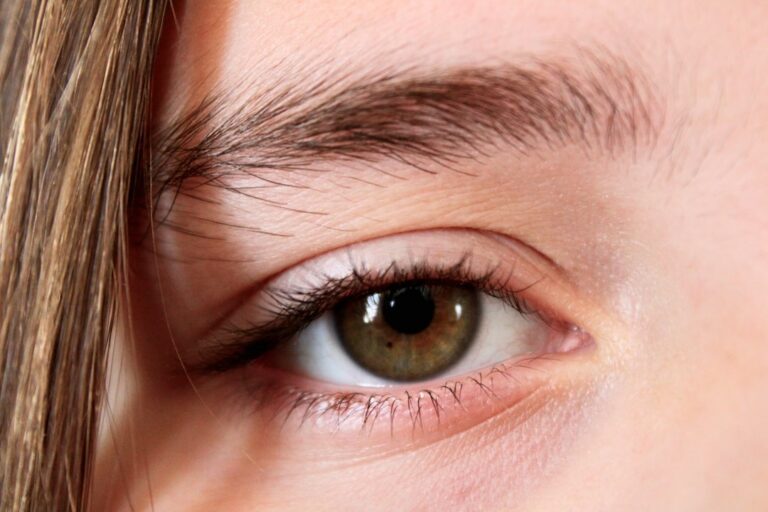
The lash line is doing a lot of the work already. Shadow just needs to fill in the gaps between the lashes, not replace them with a hard drawn line.
Building intensity gradually
If you want more definition than a soft smudge, go back over the same area with a slightly damp brush. A little water or a setting spray on the brush intensifies the color and gives you something closer to the look of a liner, but it still blends more forgivingly than a pencil since the edges stay soft rather than sharp.
Layering deeper into the crease
You can also carry the same shadow slightly up and out from the outer corner, following the natural shape of your eye, to create a soft smoky effect without a defined line at all. This works especially well if you are not going for a graphic liner look and just want your eyes to look a little more awake and defined for an everyday face.
Choosing your shade
A deep brown or a soft charcoal tends to look more wearable day to day than true black, and it is more forgiving if your placement is slightly uneven since it does not contrast as sharply against the skin. Save a true black shadow for when you want a more dramatic, defined look and already feel comfortable with the technique.
Matching to your natural coloring
If you have very fair skin and light lashes, a warm brown often reads as soft definition rather than a stark line. If your coloring is deeper, a rich espresso or charcoal tends to show up without looking harsh. There is no single correct shade, only the one that looks like your eyes rather than like a line drawn on top of them.
When you still want a small line on top
Nothing says you have to choose only one method forever. Some days, using shadow as your base definition and then adding a very small, light pencil line just along the upper lash line on top gives you the best of both, soft blended color underneath with a touch more precision where you want it. The shadow acts almost like a buffer, so even if the pencil line is not perfectly even, it blends into the shadow underneath rather than standing out on its own.
Once this becomes a familiar motion, it usually takes less time than liner did, mostly because there is no pressure to get a single continuous line correct on the first try. You are building color in layers, which is a much more relaxed way to get ready in the morning.