This article may contain affiliate links. If you buy through them, Fresh Start Beauty may earn a small commission at no extra cost to you. Learn more.
There is a right order to build a makeup collection in, and it has nothing to do with what looks impressive in a photo of someone’s vanity. It has to do with what you will actually reach for on a Tuesday morning when you have twelve minutes and a meeting at nine.
Start with what touches your face every day
If you already have the true basics, the next layer should be the products that show up in your routine most often, not the ones that feel exciting to buy. For most people that means a complexion product you trust, a way to define your brows, and something for your lips that works for both daytime and evening. These are the items that get used four, five, six times a week. Everything else is used occasionally.
It is tempting to reverse this and buy the fun stuff first, a shimmery eyeshadow palette, a bold lip color you will wear twice a year, a highlighter that only makes sense for special occasions. There is nothing wrong with owning those things eventually. But if you are building a collection with a limited budget, the products you use constantly deserve first priority because they get the most wear per dollar spent.
Then fill in the products that solve a specific problem
Once your daily layer is solid, move to the products that fix something you have noticed bothers you. Maybe your under eyes look tired by afternoon and a good concealer would help. Maybe your mascara flakes by lunchtime and you need one that holds up. Maybe you have been using the same drugstore blush since college and it is chalky now. These targeted purchases are more satisfying because you are solving a real annoyance instead of guessing at what you might need.
I like to keep a running note on my phone of small complaints, this doesn’t blend well, this fades too fast, this shade is wrong for me now. When it is time to replace something or add to the collection, I go to that list instead of wandering a beauty aisle hoping something jumps out.
Save the extras for last, and mean it
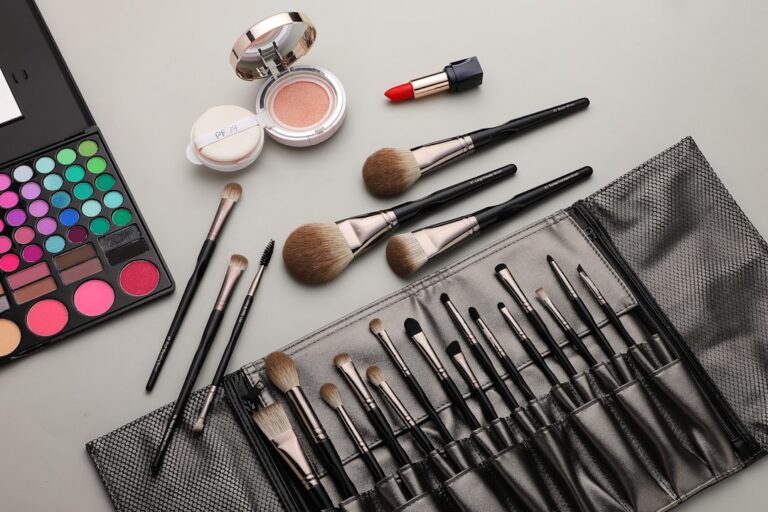
Extras are the products that are genuinely optional. A second or third eyeshadow palette. A specialty brush for a technique you have not learned yet. A trend color you saw on someone else. None of these are bad purchases, but they belong at the end of the list, not the beginning, and definitely not before your basics are solid.
The reason this order matters so much is that a collection built backward, exciting extras first, basics an afterthought, ends up looking full but performing empty. You open your drawer and see a lot of products, but on a rushed morning none of them are the thing you actually need.
How to budget across the categories
A workable way to think about spending is to weight it toward the categories you use daily and taper off from there. Complexion and daily basics should get the largest share of your budget, since those products run out fastest and get used most. Targeted problem solvers get a moderate share, bought as needed rather than all at once. Extras get whatever is left over, and it is fine if that is very little for a while.
This does not mean you need to spend a lot of money on the daily basics either. It just means if you are choosing between upgrading your everyday concealer or buying a new eyeshadow palette, the concealer usually wins because you will use it so much more often.
A full collection that gets ignored is not actually more useful than a small one that gets used every single day.
What this looks like month to month
In practice, building a collection this way is slow and a little boring, and that is the point. Month one might just mean replacing a tired concealer. Month two might be a new mascara because the old one dried out. Month three, once the basics are genuinely solid, you might finally add that eyeshadow palette you have been eyeing. By spacing it out this way, you are never buying something out of impulse that ends up unused in a drawer.
Signs you are ready to move to the next layer
You know your daily basics are solid when you can put together your everyday look without thinking twice about what is missing. If you keep reaching past a product because it is not quite right, that is a sign to fix it before adding something new. If your daily routine feels complete and reliable, that is your cue that it is time to start filling in the problem solvers or, eventually, the extras.
The takeaway
Build daily basics first, problem solvers second, extras last, and let your actual habits decide the order rather than what is trending. A collection built in this sequence will feel useful at every stage, not just once it is finally complete.