This article may contain affiliate links. If you buy through them, Fresh Start Beauty may earn a small commission at no extra cost to you. Learn more.
Lipstick formulas get a lot more attention than they deserve for being confusing, because once you understand what each one is actually doing on your lips, the whole thing gets simple fast. I used to buy whatever tube looked prettiest in the package and then wonder why half my collection sat untouched in a drawer. Turns out the packaging was never the problem. The formula was.
Every lipstick formula is really just a different ratio of wax, oil, and pigment. That ratio determines how it feels, how long it lasts, and how it behaves on your particular lips. Once you know what you are working with, you can walk into any store and know within seconds whether a formula is going to work for you.
Matte Formulas
Matte lipstick has the highest pigment load and the least oil, which is why it grips color so well and lasts through a meal in a way other formulas cannot always manage. That same low oil content is also why matte can feel drying, especially if your lips already run on the dry side.
If you love the look of matte but your lips protest, the fix is almost always prep, not avoidance. A light layer of balm underneath, given a few minutes to sink in before you apply color, changes the whole experience. Some people also find that certain matte formulas within a line feel completely different from each other, so if one dries you out, it does not mean the whole category is off the table.
Who tends to like matte
- People who want color that survives coffee, lunch, and talking without needing a touch up
- People with naturally oily lips who find matte helps color stay put longer
- Anyone who wants a bold, opaque color payoff in one swipe
Satin and Cream Formulas
Satin sits right in the middle. It has more slip than matte but still delivers solid color, and it tends to feel comfortable on almost everyone because the balance of wax and oil is more forgiving. Cream formulas lean even softer, with a slight sheen and a texture that glides rather than grips.
These are the formulas I point people toward when they are nervous about lipstick in general, because the margin for error is bigger. They blend more easily if your line gets a little uneven, and they do not accentuate texture on the lips the way a very matte formula can.
The formula that flatters your lips the most is usually the one you forget you are wearing.
Gloss and Balm Formulas
Gloss and tinted balm are the lowest commitment options, and that is exactly their appeal. They add shine and a wash of color without the precision that matte demands. If your lips are on the drier side, or if you just do not want to think about your lip line every time you catch your reflection, this category is worth spending real time in.
The tradeoff is staying power. Gloss moves around more, needs reapplying more often, and can feel sticky depending on the formula. That is not a flaw so much as a different set of priorities. Some days you want low maintenance more than you want eight hours of wear.
Liquid Lipstick and Stains
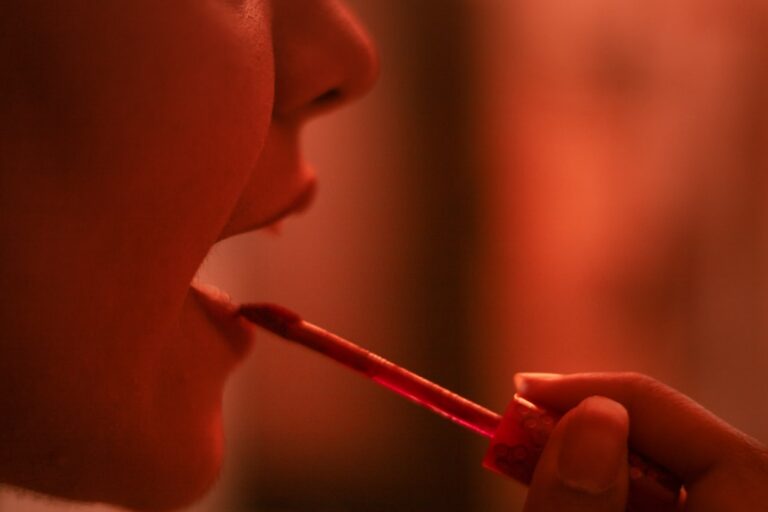
Liquid lipstick usually dries down to a matte or semi matte finish and behaves similarly to traditional matte once it sets, but the application is different since you are working with a wand instead of a bullet. Stains work differently altogether. They deposit pigment into the surface of your lips rather than sitting on top, so the color often looks a little different than it appears in the tube and tends to fade unevenly rather than wiping off all at once.
If you have tried a stain and felt like the color went patchy by the end of the day, that is normal for the category, not a sign you did something wrong. Stains reward a light hand and low expectations for perfect edges.
How to Actually Test a Formula
Swatching on your hand tells you almost nothing about how a formula will behave on your lips, because the skin texture and moisture level are completely different. If you can, swatch on your actual lips at a counter, or ask for a sample. Pay attention to how it feels after twenty minutes, not just in the first ten seconds.
A few honest questions can save you money and drawer clutter:
- Does this feel tight or uncomfortable after it sets, or does it stay comfortable
- Does it settle into any lines rather than sitting smooth
- Would I want to wear this for a full day, or does it feel like something I would need to fix constantly
Matching Formula to Your Lip Type
If your lips run dry or you notice flaking, look toward satin, cream, or a well formulated gloss before you commit to a fully matte finish. If your lips are naturally soft and hydrated, you have more range and can experiment freely with matte without much downside. If you deal with feathering, where color creeps into the skin around your lips, a slightly thicker formula with more wax tends to stay put better than a very fluid one.
None of this is about finding the one correct formula everyone should wear. It is about noticing what your own lips actually do and picking a formula that works with that instead of fighting it every single day.