This article may contain affiliate links. If you buy through them, Fresh Start Beauty may earn a small commission at no extra cost to you. Learn more.
Warm and cool undertone talk can make choosing a lipstick feel like a test you did not study for. You stand in front of a wall of shades, someone online says to look at your veins, and somehow that is supposed to unlock the exact right red for your face. I want to walk back from that a little, because picking a lip color does not need to be that complicated to work well.
A full breakdown of undertone and how it applies to your whole face belongs to a different conversation, one that gets into foundation matching and color analysis in a lot more depth. For lips specifically, you can get most of the way there with a much simpler approach, because lip color sits close to your face and reads mostly by contrast and by how it makes your teeth and skin look, not by a precise undertone match.
Start With the Base Question
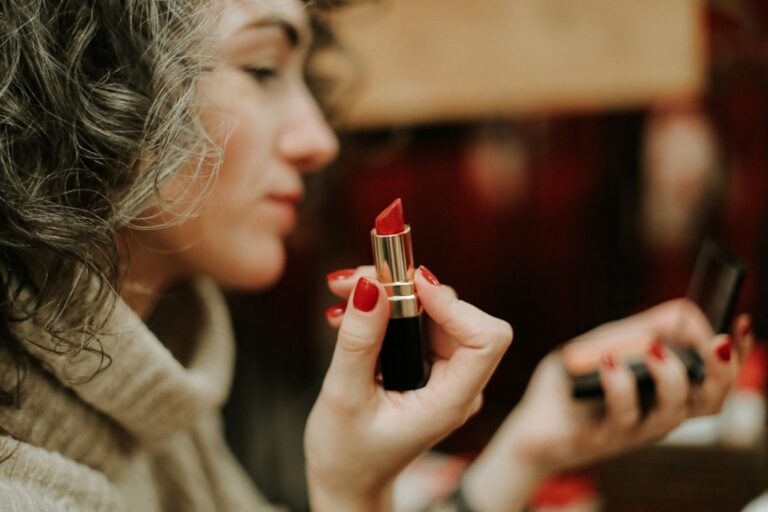
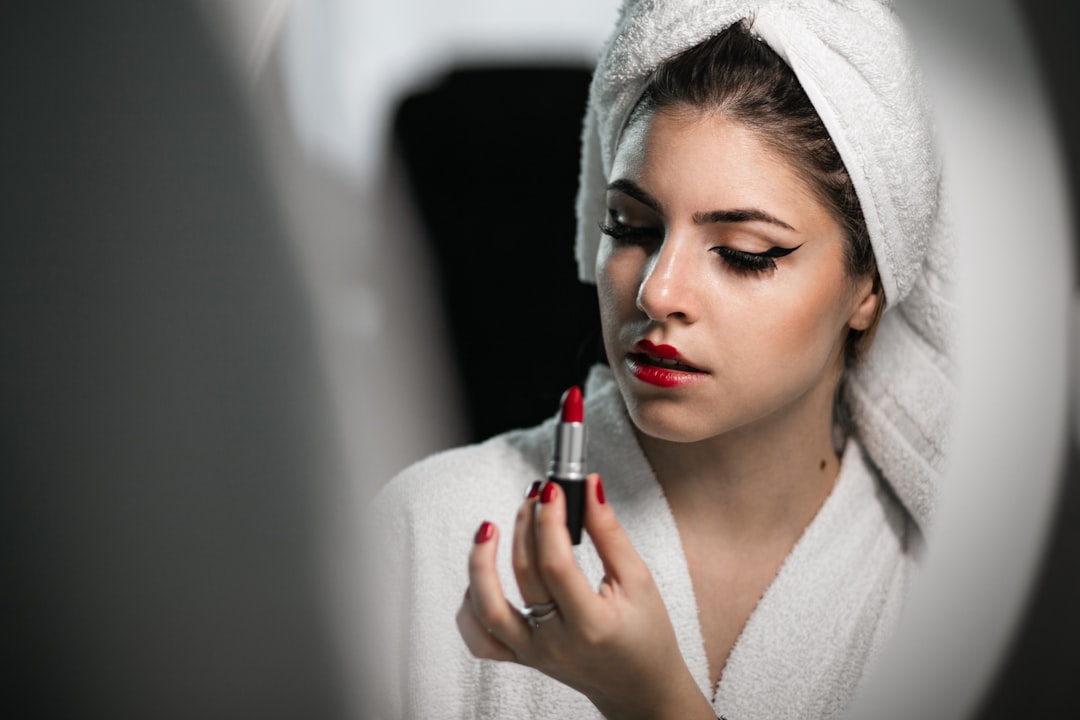
Instead of asking whether you are warm or cool, ask something more useful: does this color make my face look brighter or does it flatten things out. That is a question you can answer just by looking, no chart required. Hold a lipstick near your face, in daylight if you can, and watch what happens to your overall coloring. Brighter and more awake is a good sign. Tired or washed out means try a different one, regardless of what undertone theory would have predicted.
A Quick Way to Narrow the Field
- Berry and blue based reds tend to lean cooler and often flatter people with pink or ruddy undertones in their skin
- Orange based reds and coral tend to lean warmer and often flatter people with golden or olive undertones
- Brick and brownish reds sit in between and work on a surprisingly wide range of people
These are starting points, not rules. Plenty of people break the pattern completely and that is fine. The goal is narrowing where you start swatching, not locking in an answer before you have even looked at the color on your actual lips.
Depth Matters as Much as Tone
One thing that gets lost in warm versus cool conversations is depth, meaning how light or dark a shade is relative to your natural lip and skin coloring. A color can be technically the right temperature for you and still look wrong because it is too light or too dark for the contrast level your face is used to.
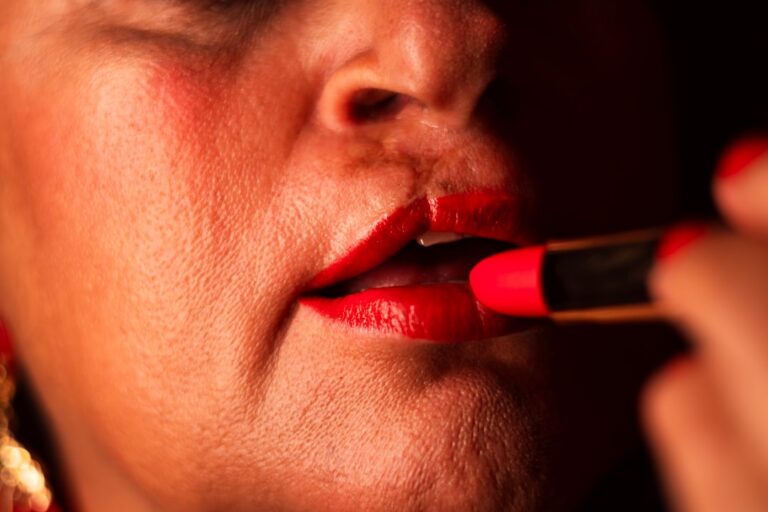
If you have deeper natural coloring, very pale nude shades can sometimes wash out your lips entirely, making your mouth disappear into your face rather than defining it. If you have fair coloring, a very deep shade can look heavy or stark unless you build it up gradually rather than applying it full strength right away. Neither of these is a rule you must follow, just something worth noticing if a color feels off and you cannot pin down why.
The best lip color test is not a chart. It is looking in a mirror and asking if your face looks more alive or less.
Nude Is Not One Color
Nude gets treated like a single universal shade and it is really not. A nude that matches one person’s lips almost exactly will look chalky or gray on someone else, purely because it was never designed with their coloring in mind. If a nude lipstick has ever made you look a little unwell, that is usually not a sign nudes are wrong for you. It is a sign that particular nude was wrong for you.
A better approach is to think of nude as a category with a wide range inside it, from pale pinkish beige to deep caramel to muted mauve. Somewhere in that range is a version that reads as close to your natural lip color, just slightly more even and polished. That is the one worth hunting for, rather than assuming the whole category does not suit you.
When You Are Shopping and Cannot Test in Person
If you are buying online and cannot swatch first, look at swatch photos on a range of lip tones rather than just the single model shot on the product page. Seeing how a color reads across different depths of natural lip color gives you a much better sense of what it will actually do than one photo ever could.
Reading the undertone description in the product listing can help too, but treat it as a rough guide rather than gospel. Brands are not always consistent with each other about what counts as warm versus cool, so the same word can mean slightly different things from one lipstick line to the next.
Give Yourself Permission to Ignore the Rules
If you have a color you love wearing and it technically breaks every warm or cool guideline you have read, keep wearing it. The rules exist to help you narrow down options faster, not to override what you can see with your own eyes in the mirror. Confidence reads on a face just as strongly as color theory does, and honestly it usually reads stronger.